
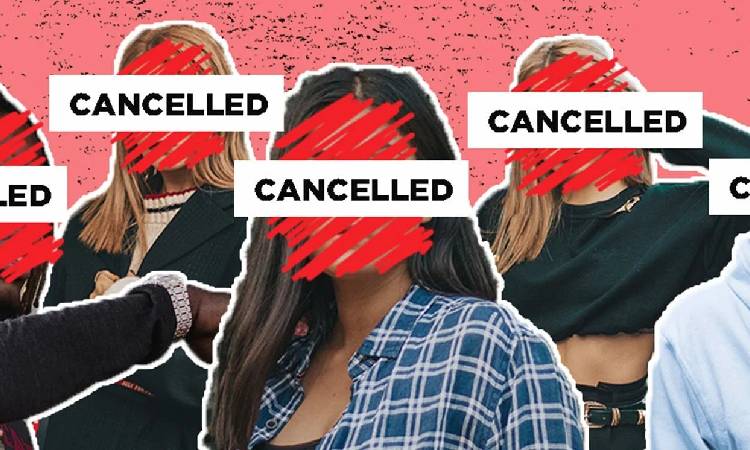
In these troubled times, globally, when the far-right wave has also gripped many democratic societies, the phenomenon of ‘cancel culture’ is the resistance tool put into use by the ‘conservatives,’ ‘liberals,' and all those who claim to be 'moral guardians of society.' However, the pervasive imprint of ‘cancel culture’ shows that intolerance is the standard playbook on both sides of the aisle. “You are either with us or against us,” goes the popular dictum. Does this augur well for the human society, asks Professor Shantanu Chakrabarti in this third edition of Glimpses from an Eastern Window.
Text page image credit: Her culture
Home page image credit: Bmoi/Flickr
Banner image credit: Odishabytes
The recent controversy surrounding the producers of the film The Bengal Files' inability to get the movie publicly screened in West Bengal has rekindled old debates about artistic license, cultural autonomy, and state censorship. The makers of the movie, Vivek Ranjan Agnihotri and Pallavi Joshi, alleged that they faced an ‘unofficial’ ban due to pressure on theatre owners.
In fact, the filmmakers could manage to have the first public screening of the movie in Kolkata on 13 September 2025, nearly a week after its nationwide release.
The event, an invitation-only affair, took place at Dr Syama Prasad Mookerjee Bhasha Bhavan within the National Library under heavy security cover. The filmmaker and his wife, actress-producer Pallavi Joshi, had also written to the President of India, Droupadi Murmu, seeking her intervention after alleging that the movie is facing an ‘unofficial ban’ in West Bengal.
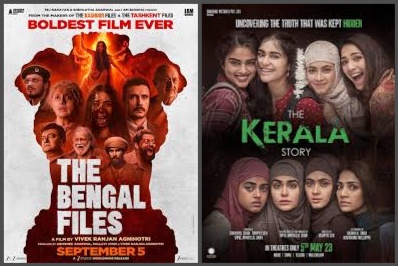
Banning of literature, films and other cultural products is, however, not something new. Sudipto Sen directed the film The Kerala Story (2023), which also faced opposition and a State-imposed ban in West Bengal till the Supreme Court intervened and allowed the screening of the movie with an added disclaimer.
Many people would attribute this tendency to the inheritance of colonial policies and the continuation of that bureaucratic-centric and designed mentality.
The movie Kismet, starring Ashok Kumar and Mumtaz Shanti, released in 1943, for instance, is often regarded as the first Indian blockbuster as it ran successfully in several movie theatres across India for several weeks and even months. The movie, though, was a social drama, attracted State attention because of a song with lyrics Door Hato Ai Duniya Walo Hindusthan hamara hain played out in a theatre scene in the movie.
Written by Kavi Pradeep and composed by Anil Biswas, the song initially could escape the attention of the censors as it included anti-Axis lines like Tum na kisike aage jhukna, German ho ya Japani.
Released just months after the Quit Indian movement, the people, however, understood the anti-colonial message interspersed within the song. The British-controlled Indian government became alarmed with the news of the song being played multiple times during screening on public demand and the audience standing up, cheering and clapping. Though the movie was not banned, a warrant was issued against Kavi Pradeep, who, however, managed to escape arrest by going underground.
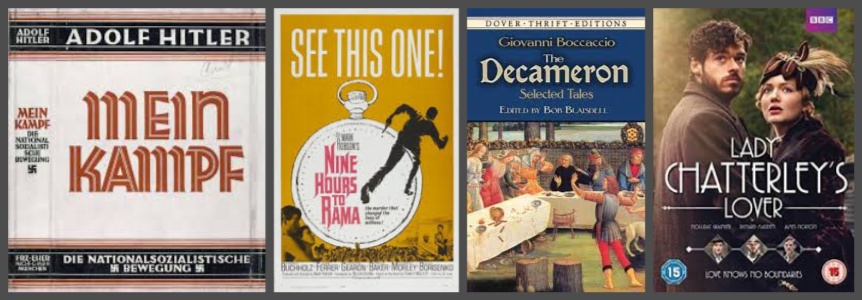
Independent India has also witnessed multiple state attempts towards censorship. The two most well-known cases in the early years after independence were the ban on Stanley Wolpert’s novel Nine hours to Rama (1962), based on the circumstances leading to the assassination of Mahatma Gandhi, and the film based on the novel released in 1963.
For a long time, though available on online platforms like YouTube, it was not allowed to be streamed in India. Another Bengali film, 42, based on the colonial state’s atrocities during the Quit India movement, ironically, could not be initially released in West Bengal at the time of its all-India release in 1951.
The reason was that the villainous police officer’s character (played by the veteran Bengali actor Bikash Roy) depicted in the film was based on the activities of a police officer who actually existed and was still serving in the police force. Bikash Roy recollects in his autobiography that the film could be released later in West Bengal only after the concerned person had retired from service.
The famous Indian director Satyajit Ray’s movies were criticised by former actress Nargis Dutt, who had become an MP in the Rajya Sabha, as poorly depicting India. Ray’s documentary on Sikkim, made in 1971, was banned by the Indian government after Sikkim’s merger with India in 1975. The ban was lifted thirty-five years later in 2010.
There are analysts who point out that such things happen because of essential authoritarianism and the illiberal nature of non-Western societies like ours. However, it is amusing to see friends and colleagues from the West gasping at copies of Mein Kampf (Hitler’s autobiography) being sold by roadside hawkers in makeshift bookstalls in India. Equally marveled they will be on seeing the list of all-time classics like Giovanni Boccaccio’s Decameron and Lady Chatterley’s Lover by D.H. Lawrence, which have been on the banned list in Western countries for a long time.
The range and State outreach concerning censorship, of course, is culture-specific. Probably, as human beings living in a daily changing society, we are becoming more conservative and authoritarian with the times. However, if it is true, it is a global phenomenon, not specific to non-Western societies.
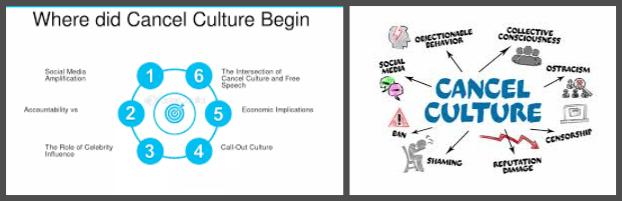
The rise of the cancel culture, for instance, is still largely evident within Western academia (along with some radical leftist-dominated and identified) Indian campuses, but it has already generated a huge global impact. For the uninitiated, ‘cancel culture,’ while described in varied terms, essentially refers to the collective boycotting or publicly rejecting and ending support for an individual or a section of people because of their “socially or morally unacceptable views or actions.”
Cancel culture, while in action, involves challenging and demanding the removal of perceived hegemonic symbolisms and their representatives (ranging from university professors to authors and rival activists) from their own social and institutional spaces.
Though mostly based upon valid premises like historically inherited unrectified policies and structures, the efforts to challenge and confront this phenomenon through socio-cultural movements often end up producing their own versions of counter-hegemonic cultures through illiberal methods and movements.
As one recent study on the Cancel Culture phenomenon by Pippa Norris reveals, “The evidence presented in this study generated a summary Cancel Culture Index, reflecting experience of growing restrictions on academic freedom of speech, pressures for ideological conformity, and the enforcement of politically correct speech.”
While urban, educated people globally claim to cherish liberal views and being tolerant, in practice, we seem to detest and hate counter-viewpoints as intrusions into or within our personal space. This has been a rising trend, particularly with the communication revolution, which emerged as part of the globalisation process, has opened numerous social platforms where we mock, caricature and spew venom at each other rather than trying to understand and share ideas.
It has emerged as a truism that we become much more focused on self-preservation and self-care, while differing viewpoints are often regarded as a moral failing rather than a difference of opinion, per se. This phenomenon has been defined by Jennifer Tiedemann as the ‘rise of intolerant tolerants.’ As Pippa Norris’ study indicates, there is hardly anything to differentiate between the radicals, left-liberals or the conservatives in this regard.
India, on the other hand, seems to be following the global trend in this regard rather than setting a different example. The ugly scenes of young customers jostling and fighting with each other at a Mumbai Apple store as they queued up to buy the latest iPhone 17 some days ago are an indicator of times. If one is not even tolerant of another customer getting his/her hands on the latest brand before you, forget about sharing divergent viewpoints.
One should, then, perhaps not worry that much about the State’s attempts towards censoring. States, as organisational structures, are organically conservative, trying to act as a sieve filtering all opinions and ideas. Most often, as history shows, such attempts fail.
What one should, however, worry about is the worldwide sharp rise in intolerance amongst ordinary people, leading to a more violence-prone world. The ancients had predicted that “whom the gods destroy, they first make mad.” But, then again, we had an American comedy film made in 1963 titled It’s a mad, mad, mad, mad world, which was a roaring hit.
So, the jury is still out!
Follow us on WhatsApp:
Follow us on Facebook:
Follow us on X @vudmedia
